
Loading...
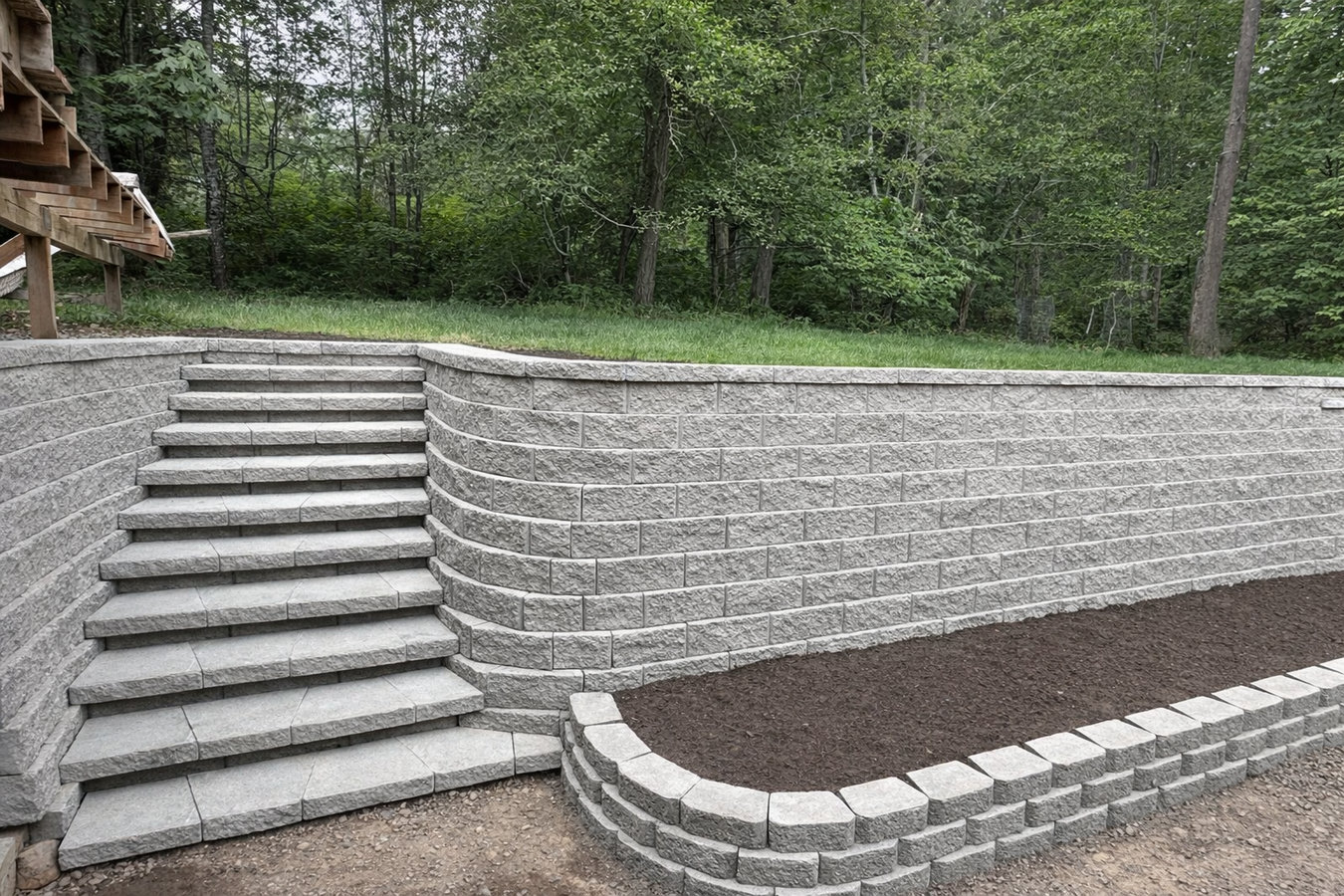
Shifting soil, leaning walls, and slopes that wash out after rain are problems that get worse every season you wait. We build retaining walls in Santa Maria with proper drainage and deep footings sized for local soil conditions.
Retaining wall construction in Santa Maria means excavating a stable footing, building a drainage system behind the wall so water has somewhere to go, and setting concrete block, stone, or poured concrete course by course. Most residential jobs - 20 to 40 feet long and under 6 feet tall - take two to five days.
A retaining wall holds back soil on a slope so it does not slide, erode, or push into your yard, driveway, or home. Without one, a hillside or raised planting bed slowly creeps downhill - especially after Santa Maria's concentrated winter rains. Getting this right from the start means you do not replace the same wall five years from now.
If your slope is near a driveway or paved area, our masonry restoration service can address any damage to surrounding masonry at the same time, keeping the work coordinated and efficient.
If you can see soil moving toward the lower part of your yard - especially after winter rains - the slope is not stable. You might notice small ridges forming, plants tilting, or mulch piling at the base. In Santa Maria's sandy soils, this movement can accelerate quickly once it starts.
A wall that leans away from the slope behind it has a failed drainage system or footing. Horizontal cracks near the middle are especially serious - they often mean the wall is being pushed from behind by water pressure. A wall that is already moving can fail suddenly, so this one should not wait.
If water collects at the bottom of a slope after rain rather than draining away, the soil above is likely saturated and unstable. A retaining wall with a proper drainage system would redirect that water safely and keep the slope in place through the wet season.
Any time you want to create a flat, usable surface on a sloped lot - whether for a patio, raised planting area, or parking pad - you need a retaining wall to hold the grade change. Without one, the soil behind the new surface will eventually push through or wash away.
We build retaining walls using concrete block, poured concrete, and natural stone. Every wall we build includes a drainage system behind it - gravel backfill and a drainage pipe - so water does not build up and push the wall outward. If you have an aging wall that has started to show stress, our masonry restoration service may address the issue before it becomes a full replacement.
For customers building out their yard at the same time, we can coordinate retaining wall construction with concrete block walls for fencing or property boundaries, keeping the job organized under one contractor rather than juggling multiple crews.
The most common choice for Santa Maria homeowners - durable, cost-effective, and well-suited to local soil conditions.
Best for taller walls or applications that need maximum strength, often used where an engineer's review is required.
A premium option for homeowners who want a wall that fits naturally into a garden or landscaped setting.
Santa Maria's climate concentrates most of its rainfall between November and March. After a long dry summer, soils shrink and pull away from structures. Then winter rains saturate the ground quickly. That repeated swelling and shrinking puts stress on retaining walls every year, which is why drainage design is especially critical here. A wall built without proper drainage will start leaning or cracking within a few wet seasons - we see it regularly when we are called in to replace walls that were not built with local conditions in mind. We serve homeowners in Nipomo and Guadalupe who face the same seasonal soil pressure.
Many of Santa Maria's established neighborhoods were built on cut-and-fill lots - where part of the yard was cut into a hillside and the excess soil was used to fill another area. These older fill areas can be less stable than natural ground, and retaining walls built on them need extra attention to footing depth and drainage. The City of Santa Maria requires a permit for walls over 4 feet tall, and walls near property lines or slopes often require engineering review regardless of height. We handle the permit process so you do not have to navigate it on your own.
Learn about erosion control principles from the USDA Natural Resources Conservation Service.
We respond within 1 business day. We will ask about your slope, what is above and below it, and what you want to accomplish before scheduling a free on-site visit.
We review your yard in person, assess soil conditions and drainage, and discuss material options. You receive a written estimate that breaks out materials, labor, and permit costs - no surprise add-ons.
If your wall requires a City of Santa Maria permit, we handle the application and keep you updated on review timelines, which typically run one to three weeks.
Excavation and footing work take one to two days. Wall construction and drainage installation follow. After completion, we walk you through the finished wall and tell you what to watch for in the first rainy season.
We respond within 1 business day. No commitment required after your estimate. Someone from our team will call to schedule your free site visit after you submit.
(805) 867-6978Water is the number one reason retaining walls fail. We install gravel backfill and drainage pipe behind every wall we build, so water moves through and away rather than building up and pushing the wall outward.
Santa Maria Valley soils shift more than denser ground. We dig deeper footings and use a more carefully engineered base than contractors less familiar with this valley. That footing depth is what separates a 50-year wall from one that leans in five.
We handle the permit application, communicate with the Building Division, and schedule any required inspections. You never have to figure out what approvals are needed or chase the city for updates.
Your estimate breaks out materials, labor, permit fees, and any site-specific requirements before you commit to anything. What you see in the quote is what you pay - no additions once work begins.
A retaining wall that fails is not just a visual problem - it can damage your yard, your neighbor's property, and your home's foundation. The three things that prevent failure are proper drainage, adequate footing depth, and correct permits. Those are the three things we get right on every job.
Learn more about segmental retaining wall standards from the National Concrete Masonry Association.
Restore an aging or damaged masonry wall before failure turns a repair into a full replacement.
Learn MoreConcrete block is one of the most durable and cost-effective retaining wall materials for Santa Maria lots.
Learn MoreSanta Maria's wet months start in November. Schedule your estimate now so your slope is protected before the rain arrives.