
Loading...
Crumbling mortar joints give Santa Maria's winter rains a direct path into your walls. We remove old mortar and replace it with a mix matched to your specific bricks before the damage gets expensive.
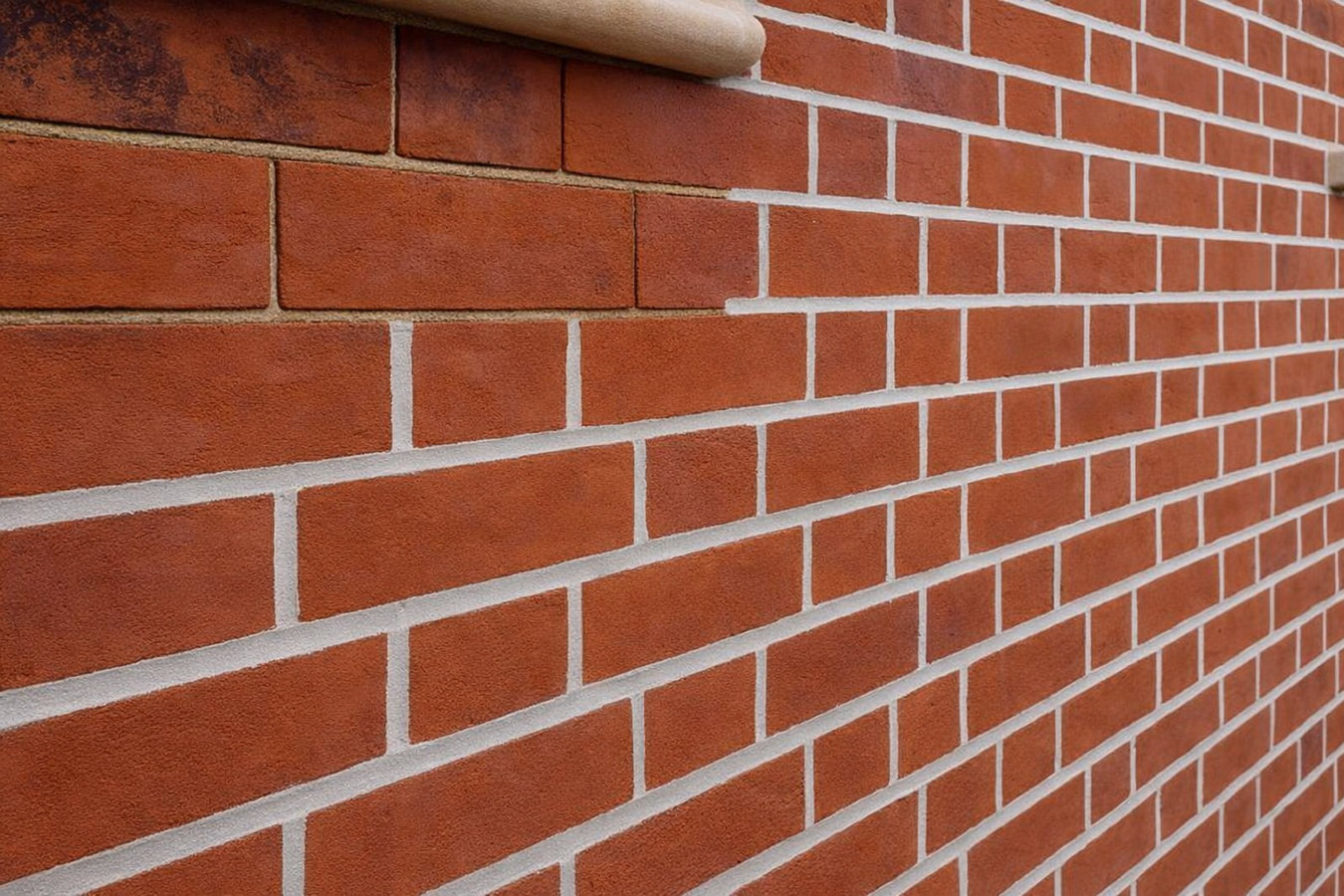
Brick pointing in Santa Maria is the process of removing crumbled mortar between bricks and packing in fresh mortar - a repair that restores the moisture barrier between your brickwork and the outside, and most jobs covering a single wall or chimney take one to two days to complete.
Most mortar has a lifespan of 25 to 30 years before it starts to fail, and a large share of Santa Maria's housing stock was built before 1980 - which means a lot of local homes have mortar that is well past due for attention. The daily marine layer off the Pacific speeds up this deterioration on homes in lower-lying areas and on the west side of town. If you have also noticed issues with the stone features on your property, our stone masonry service covers the same kind of mortar and structural repair work for stone surfaces.
Press your fingertip firmly into a mortar joint. If it crumbles, flakes, or feels soft instead of hard, it has lost its integrity. Healthy mortar should feel almost as firm as the brick itself. Once mortar softens, water has an easy path in, and the damage it causes is far more expensive than the repair.
Visible gaps mean water is already getting in. This is especially common on the south- and west-facing sides of Santa Maria homes, where the combination of summer sun and the coastal fog cycle has worked on older mortar the longest. Sections that have fully fallen out should not wait - open joints let water in every time it rains.
Cracks that follow a diagonal, stair-step pattern along the mortar joints often signal that the wall has shifted slightly. This can happen gradually over time in the seismically active Santa Maria Valley. This pattern is worth having a mason assess, because it can indicate movement that repointing alone may not fully address.
Chalky white streaks are called efflorescence - salt deposited by water moving through your masonry. If you notice them appearing or getting worse after Santa Maria's winter rains, water is traveling through your mortar joints and carrying minerals with it. It is a reliable early warning that the joints need attention before the problem grows.
We provide brick pointing and repointing on the full range of residential masonry surfaces in Santa Maria - chimney stacks, exterior walls, garden walls, planters, and brick veneers. Before we mix anything, we assess the age and type of your bricks, because using mortar that is too hard on older, softer bricks causes the bricks themselves to crack over time. For homes built before 1980, this step is not optional - it is what separates a repair that lasts 25 years from one that starts failing in five. We also handle tuckpointing for decorative two-tone joint work on properties where the appearance of the mortar joints is as important as their function.
If the brick surface itself has damage beyond the mortar - spalling faces, cracked bricks, or areas where bricks have shifted - those are addressed under our foundation repair or structural masonry services depending on the location and severity. We are straightforward about what each repair scope includes so you know what you are getting before work starts.
Best for homeowners with chimneys that have not been inspected in years, especially on pre-1980 homes where the original mortar has likely never been replaced.
A good fit for homeowners who have noticed crumbling joints, efflorescence, or soft mortar on an exterior brick wall and want to stop water infiltration before it causes structural damage.
Right for homeowners with brick garden walls or planters where mortar has fallen out, leaving the structure weakened and the appearance worn.
The right choice when both the mortar integrity and the visual profile of the joints matter, such as on a front-facing brick wall where appearance is part of your curb appeal.
Santa Maria's rainy season runs from roughly November through March, and the shift from months of dry heat to sustained rain is hard on mortar joints that are already showing wear. Homeowners often notice problems most clearly in late fall, right before the rains hit - which is exactly when you want to have repairs done, not after the first storm has already pushed water into your walls. The marine layer that rolls through most mornings adds another moisture load that most homeowners do not think about. Over years, that daily fog deposits fine moisture on masonry surfaces night after night, and it is one of the main reasons older homes in lower-lying parts of Santa Maria see mortar deterioration faster than expected. The Brick Industry Association notes that mortar compatibility with existing brick is one of the most important factors in repair longevity, and it is something we take seriously on every job.
We do brick pointing work throughout the area, including neighborhoods in Orcutt and Nipomo, where homes from the same postwar building era have the same aging mortar issues. If your home was built before 1980 and the mortar joints have never been inspected, there is a real chance some sections are already past the point of functioning as a water barrier.
We ask a few questions about where the brickwork is, roughly how large the area is, and what you have noticed. We reply within one business day and schedule an on-site visit that usually takes 20 to 45 minutes.
We walk the area with you, assess the mortar joints, the bricks themselves, and any signs of water damage. We tell you what needs immediate attention, what can wait, and whether anything suggests a bigger problem. A trustworthy contractor explains what they are seeing in plain terms.
The crew grinds or chisels out old mortar to a consistent depth - this is the noisy part and produces fine dust, so expect some disruption. Once removed, fresh mortar is packed in layers and shaped to match the original joint profile. This step cannot be rushed.
After cleanup, we walk the finished work with you and explain the curing window. Keep fresh joints dry for at least 24 to 48 hours and avoid pressure washing for several weeks. We tell you what to watch for and how to reach us if you have questions.
Free estimate, written price before any work starts. We reply within one business day.
(805) 867-6978Using mortar that is too hard for older, softer bricks causes the bricks themselves to crack over time. We assess the age and type of your bricks before choosing a mix - this is especially important for the pre-1980 homes that make up much of Santa Maria's residential neighborhoods.
We know when structural masonry work requires a permit from Santa Barbara County Building and Safety and when it does not. You will not start a job and find out mid-way that you needed paperwork you did not have.
A perfect color match on older mortar is rarely possible, but we get close. On Santa Maria homes, the original mortar was often a warm gray or buff tone, and we select mixes that approximate that profile. Repaired sections blend in rather than standing out as obvious patches, which matters when curb appeal and resale value are on the line.
We tell you what needs immediate attention, what can reasonably wait, and whether anything we see suggests a problem beyond simple repointing. You get a clear picture of the situation before deciding what to do - not a sales pitch designed to upsell every issue we find.
We carry the California Contractors State License Board credentials required for masonry work in this state, and we have worked on brick structures across Santa Maria and surrounding communities long enough to know what local conditions actually do to mortar over time.
Address cracks, settling, and structural movement at the base of your home before surface repairs can hold long-term.
Learn MoreRestore mortar joints with precise two-tone finishing when both function and appearance of the joint profile matter.
Learn MoreOpen mortar joints let every winter storm work deeper into your walls - call today and get a free written estimate while there is still time to repair and cure before the rains arrive.